In Memorium of Children’s Horror
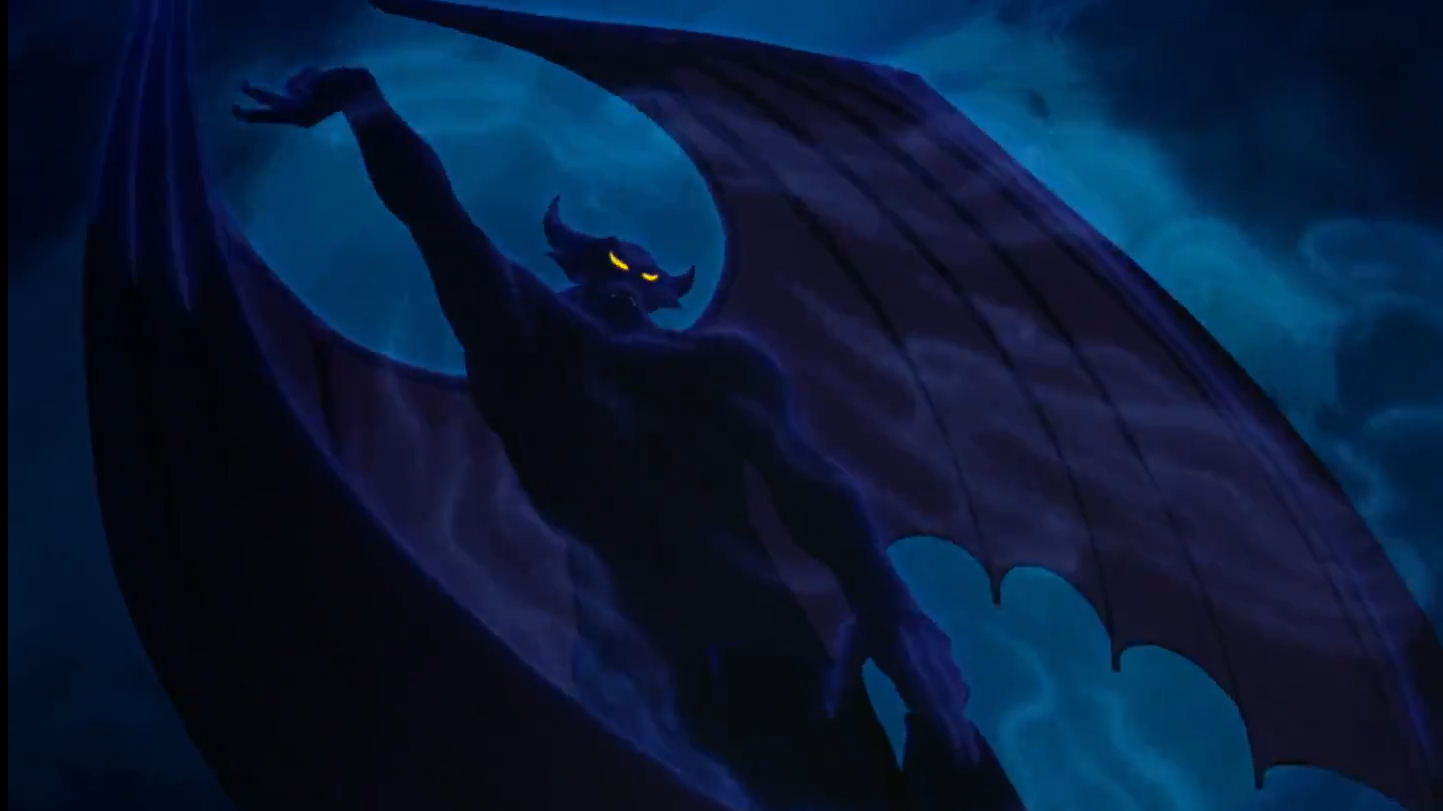
Fantasia (1940)
The pleasurable consumption of horror movies and series is a popular pastime activity that unites most of human society. This practice also extends to children, though some adults would not be too keen on their participation. Children’s horror is a sub-genre that has existed since the 1960s and has increased in popularity since the 1980s due to box-office hits like Gremlins (1984). The genre’s success has resulted in it becoming a staple in children’s media, especially seasonally around Halloween.
Generally, children’s horror is often kind to its audience, so a lot of it takes on a comedic hue. A lot of what is categorized as horror will mostly just feature supernatural characters like Scooby Doo, Hotel Transylvania (2012) and Haunted Mansion (2003/2023). My aim, however, is to specifically analyze the “frightening” examples of this form of horror media, focusing on films and series that were actually successful in scaring and disturbing children. Some of the titles that come to mind are ‘Courage the Cowardly Dog (2000 – 2002)’, ‘Goosebumps (1995 – 1998)’ and ‘Coraline (2009)’. It does seem that the “terrifying” subset of the genre has gone out of production, as there has been no notable entries in recent years. My goal with this essay, is to discuss the significance of children’s horror while lamenting its loss.
Fundamentally all children’s horror media is about acceptance as Lester argues in her thesis ‘The Children's Horror Film: Characterizing an “Impossible” Sub-genre (2016)’, however the potency of any message hugely relies in its composition. The beauty of frightening media is in its capability to transform and develop with the maturity of its viewer. We fear it as kids because of its production and presentation, and then as we mature, we start to understand and empathize with our villains. This form of storytelling is incredibly powerful and potent, because of its metamorphic quality. We often revisit these shows and movies for the sake of nostalgia, but upon our re-acquittance we develop a deeper appreciation for its covert intelligence and design.
In one notable episode of Courage, “The Mask” (S4 E7 2002), a white apparition of a character appears on the farm and begins to mercilessly harass and hurt Courage until he finds a way to get rid of her. This episode is probably one of the most remembered and the most infamous of the series. The episode famously deals with the theme of domestic abuse and does so in an incredibly gripping way. Pivoting to my personal experience, the episode completely terrified me as a child. I couldn’t understand why Kitty was so horrible and abusive towards Courage and why Mad Dog was the same towards Bunny. The irrationality of their actions paired with that jarring mask, and that horrible red apartment, made for a truly unforgettable viewing experience. At some point, Courage did stop airing on Cartoon Network and I rarely thought about it. Only occasionally I would recall the show and yearn to watch it again. When I did, this episode (like most of series) came together for me. Kitty and Bunny had some type of relationship or attraction, and resulting, Mad Dog was jealous and abusive towards Bunny for it. It was apparent that Kitty hated all dogs because of Mad Dog (to put it briefly). The episode had completely transformed my perspective; it went from being an episode about a scary masked person to a complex installment that maturely dealt with themes of abuse, relations, and featured a queer couple. There is something so enticing about the kind of media that can metamorphize like that. It lingers with us to revisit and enjoy for the rest of our life, rather than a single moment. It is a shame that this same courtesy is not extended to the new generations of younger audiences, because it also means that they are not being “taken seriously”.
The stories don’t just transform with us; they also create common ground to connect and bond with other people around us. The memories that stay with us the longest are the ones that are the most emotionally potent. Our happiest moments, saddest, angriest and even our most frightening. It is through the retelling and sharing of these memories that we can find common ground with others and connect further with our social surroundings. Not to sound like a broken record mentioning Courage again, but I can’t count the number of times when I have bonded with people over it. Everyone remembers King Ramses from “King Ramses’ Curse”; “Bring me the slab” will forever echo in the dark corners of our memories. That bond that horror brings us is even stronger when the fright is a shared experience. My fondest memories are the ones where my cousins, sister and I have scared ourselves senseless over the silliest little fantasies.
The most virtuous quality of children’s horror is that it teaches children that they are capable of challenging and overcoming the obstacles in their own lives. Neil Gaiman explains that evil is meant to be scary or else there would be any point in trying to beat it. Ultimately, the monster in any horror is in an unnatural being that exists in the world, that often represents societal anxieties and fears. Sometimes in adult horror, our protagonist is unable to overcome the principal monster, but that’s never the case in children’s media. The protagonist always perceivers and finds a way no matter how unlikely the odds may seem. Take Coraline for example, no matter how scary the “Other Mother” is, she is able to beat her, free herself and the other ghost children. During the seventh and final segment of ‘Fantasia (1940)’ ‘Night on Bald Mountain’, the darkness came and the devil rose up, bringing with him all his ghouls and ghosts. Eventually the sun rose and they had to return to their eternal dwellings. The scarier the monster, the more powerful and effective the narrative is, and that is what we should aim for when telling stories that advocate for courage.
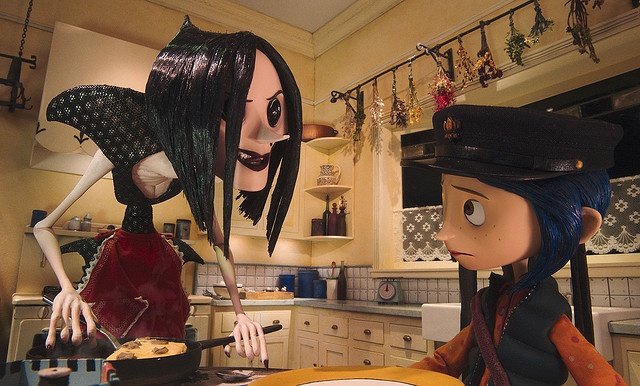
Coraline (2009)
When doing research for this little essay of mine, I came across an essay by Shannon Lewis called From Roald Dahl to Goosebumps: Horror in Children’s Lit (2023). She expertly quotes Gaiman; “horror as a condiment… in the way that you might add salt or ketchup to a meal. You just want to add a little to make it taste a little bit better, but you definitely don’t want a meal that’s all salt and ketchup.” Indulging in the occasional frightful watch is a great break from normalcy for children, as Lewis concludes. People love a little scare at the end of the night, and that does include children. If it weren’t the case, then Courage would have gone off air the week it premiered on Cartoon Network, and the likes of Tim Burton or R.L. Stine may have had a harder time getting their careers off the ground. When commenting on the success of his work, Stine says, “I think [kids] like to be scared if they know they're safe at the same time. I think they like to have these creepy adventures [where] they're fighting ghosts and they're invisible, but they know they're safe in their room reading.” Children ultimately know that they are safe at home regardless of how disconcerting their books or movies are, and if they do not then they will have the support of their parents. According to Bantinaki in ‘The Paradox of Horror: Fear as a Positive Emotion (2012)’, John Morreall would argue that people enjoy horror because they have control over it. When watching anything, we have the power to stop and it is that mental safety net that allows us to enjoy the genre. Children can run out of the room if it gets too much, its all in good fun.
Animation, both for adults and children, is going through some form of a Dark Age right now. A lot of contemporary viewers believe that the quality of cartoons has shot down. It is no secret that the animation industry is going through a crisis right now. It has been said that projects are getting cancelled left and right, with animators losing their jobs and a lot of the labor being outsourced. It seems that the space for thoughtful well produced children’s media is slowly dissipating, and the void is being filled with the empty echoes of Coco melon. It is just very disheartening to see that children are disregarded to such an extent that even the media we produce for them is not taken into consideration. What they watch and see matters, because everything they see in their formative years will be what determine what kind of adult they are in the future. I think children’s horror is just so fun and I don’t think future generations should be deprived of it.I believe in living a life of multi-faceted experiences, where a little scare every now and then can actually be good for you.